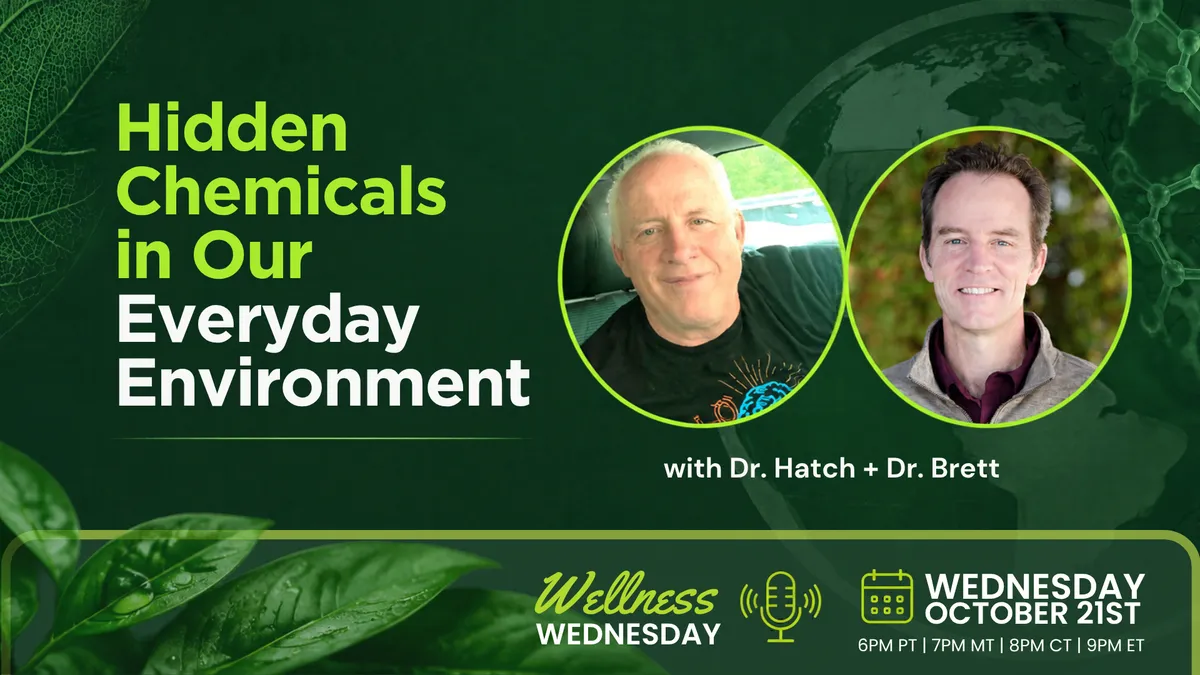
Hidden Chemicals in Our Everyday Environment
Look around the room you are in right now. How much plastic can you see? Water bottles, food packaging, clothing, toys, hand sanitizer, even the phone in your hand. Plastics and forever chemicals are woven into nearly every part of modern life, and the conversation about what they mean for our health is only getting louder. This episode of Wellness Wednesday brings that conversation home in a way that feels practical instead of scary.
Dr. Brett sits down with Dr. Hatch, a renowned expert with over 30 years of experience helping people. Dr. Brett has spent more than two decades helping patients and teaching other healthcare providers, and the two have been friends and colleagues for a very long time. Together they walk through the Six Steps to Wellness framework Dr. Brett uses, where toxins are one of six major factors that can help or hinder health, and they dig into the one that is hiding in plain sight.
What Are Forever Chemicals and Why Are They Everywhere
Plastics became popular in the 1950s and have grown more present in daily life ever since. Dr. Hatch points out how different childhood was just a generation or two ago. A toy truck used to be made of metal. Today nearly every toy, container, and package is plastic, which means children are being exposed earlier than ever.
Dr. Brett breaks down the terms people keep hearing: phthalates, BPA, BPS, microplastics, nanoplastics, and PFAS. Many of these are grouped under the name forever chemicals because they do not break down easily. They show up in plastics, packaging, coatings, fragranced products, and the water and food supply.
How Hidden Chemicals Interact With the Body’s Hormone Systems
One of the most eye opening parts of this conversation is the link to the endocrine system. Dr. Hatch shares that he had long understood how plastics relate to hormones, but his research this week helped him connect the dots to other glands like the thyroid, the hypothalamus, and the adrenals. When people walk in exhausted all the time, he realized reducing plastic exposure may be a missing link alongside nutrition and supplementation.
Dr. Brett adds that nanoplastics are small enough to pass through some of the body’s natural protective barriers. He also explains that highly active tissues with strong blood flow, such as the thyroid and adrenal glands, tend to take up these substances more readily. Hormone disruptors, heavy metals, herbicides, and pesticides all belong in the same conversation.
What the Research Shows and What It Does Not Yet Show
Dr. Brett is clear that scientists do not yet fully understand the long term effects, and there is not complete human clinical data showing that one exposure causes one outcome. His personal view is that no level of phthalates or heavy metals is healthy, and he points to studies showing these substances are found in people everywhere. This episode is not meant to alarm anyone. It is meant to educate and empower.
Everyday Sources: Water, Heat, Food Storage, Fragrance and Clothing
Both doctors agree the goal is to reduce exposure where you can. Water bottles are one of the most common sources, and heat makes it worse. Bottles left in a hot car or in direct sunlight, hot drinks in plastic cups, and food reheated in plastic containers can all intensify absorption. Dr. Hatch also shares a lesson from a mentor about dish soaps and cups, and Dr. Brett points out that even some sparkling and mineral waters can contain forever chemicals that come from the source water, even when they are bottled in glass.
Water quality matters just as much as the container. Dr. Brett shares what a water treatment expert told him: reverse osmosis is the gold standard, and a whole house system or a quality filter is a great place to start. Choose glass or stainless steel whenever possible, and remember that even glass dispensers can have plastic parts. Fragranced products, fabric softeners, dryer sheets, and some clothing are also hidden sources worth reviewing.
Can You Test for Plastics
Yes. Dr. Hatch explains that plastic testing is now available through integrative and medically oriented labs, and a local practitioner can help you find one. The reality, Dr. Brett notes, is that everyone who has been tested has some. Levels simply vary.
Supporting the Body’s Natural Processes: Nrf2, Glutathione, Omega 3s and Fiber
Because no one can avoid everything, the second half of the conversation focuses on supporting the body. Dr. Hatch explains that the Nrf2 pathway is one of the most important ways the body responds to inflammation and oxidative stress. Dr. Brett adds that this pathway helps the body make glutathione, often called the master antioxidant, and that sulforaphane from broccoli seed extract is one plant compound studied for activating it.
Omega 3 fatty acids matter because plastics are fat soluble, so the right omegas help the body gather and move them out. Fiber is just as important. Dr. Hatch notes that most diets are so processed they lack the fiber the body needs to bind and carry things out through the digestive tract.
What to Remove First: Sodas, Processed Foods, Canned Foods and Nonstick Pans
When asked for the top things to remove, Dr. Hatch names sodas first. High fructose corn syrup drives inflammation, and carbonation can disrupt the gut. His second rule is simple: if it comes in a box or a bag, skip it. Dr. Brett adds canned foods, since many can linings use BPA or BPS, along with plastic water bottles, plastic food containers, and nonstick pans. Choosing organic whole foods, growing a garden, and eating clean lowers the load the body has to handle, which helps everything else work better.
Start Small: One or Two Changes Become Your New Normal
Dr. Brett closes with the heart of the message. Exposure builds up over time, so this is not a game of doing it for a week or a month. Choose one or two changes, such as no more heating food in plastic, no more nonstick pans, or no more plastic water bottles, and make them your new floor. When children and grandchildren grow up with those habits as their normal, it changes the next generation too.
Wellness Wednesday is a free weekly wellness conversation designed to give people the tools, knowledge, and encouragement to make lasting changes. If this episode made you look around your home differently, share it with someone you care about.
This content is for educational purposes only and is not intended to diagnose, treat, cure, or prevent any disease.
🎙 Listen on Apple Podcasts, Spotify, and everywhere you get your podcasts.
https://biohackandactivate.com/activationpodcast
In This Episode We Discuss:
Why plastics and forever chemicals show up in nearly every part of daily life
What phthalates, BPA, BPS, microplastics, nanoplastics, and PFAS actually are
How these substances can interact with the endocrine system, including the thyroid and adrenal glands
Why heat intensifies absorption and what it means for water bottles, hot drinks, and reheated food
Water filtration options from reverse osmosis to glass and stainless steel containers
How the Nrf2 pathway, glutathione, omega 3s, and fiber support the body’s natural processes
The top foods and products to remove first and the simple swaps to start with
Key Takeaways:
Exposure builds over time, so small consistent changes matter more than perfection
Heat plus plastic is the combination to avoid, especially with water, hot drinks, and food
Water quality and water containers are among the biggest everyday sources to address
Supporting the body with fiber, omega 3s, and Nrf2 pathway nutrition helps it handle the environment we live in
Choose one or two changes, make them your new normal, and let it become your family’s new normal too
Save these links in your records so you can easily return to them.
You can listen to all recordings via audio by visiting this link:
https://biohackandactivate.com/activationpodcast
You can also find us on Apple Podcasts here:
https://podcasts.apple.com/us/podcast/wellness-wednesday-activation-podcast/id1860715006
And on Spotify here:
https://open.spotify.com/show/6wDumT9yTsCzNWD9LxzeIm
We release new episodes every week, so there is always fresh content to guide you on your wellness journey. Tune in, get inspired, and start supporting your body and mind from the inside out.
Thank you for joining us for another Wellness Wednesday discussion.
