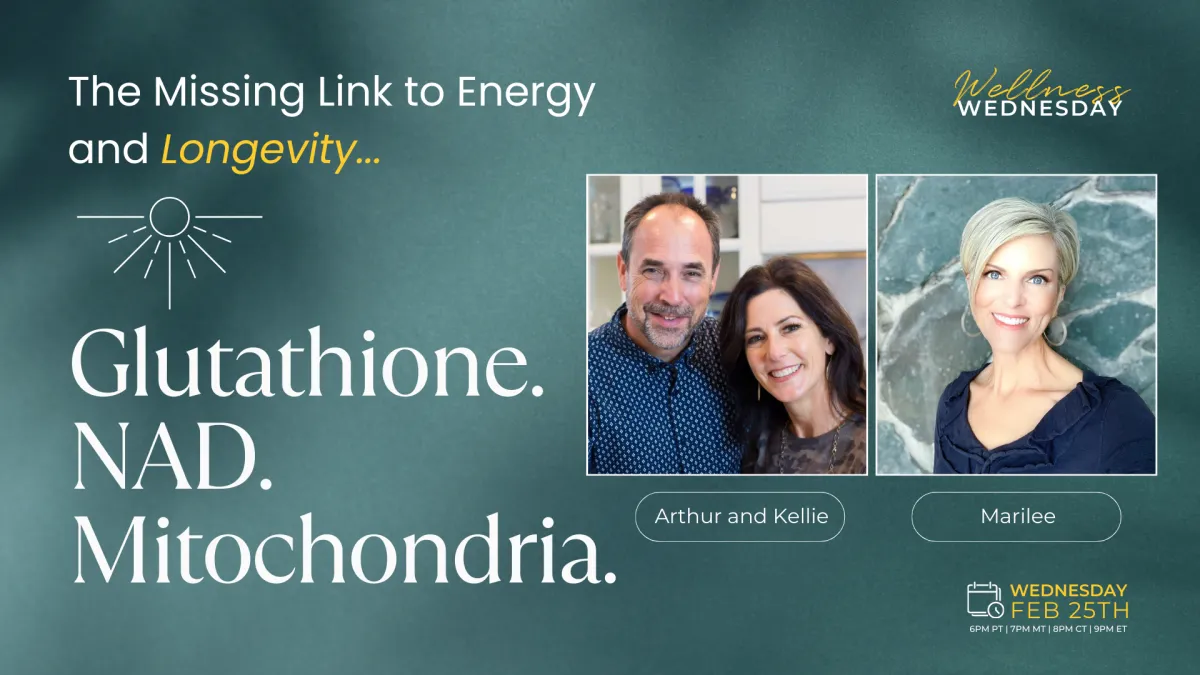
The Missing Link to Energy and Longevity: Glutathione, NAD and Mitochondria
The Missing Link to Energy and Longevity: Glutathione, NAD and Mitochondria
If you feel tired all the time, foggy headed, slower to recover, or like your energy just is not what it used to be, you are not alone.
One of the biggest conversations in health right now revolves around three powerful cellular players: Glutathione, NAD, and Mitochondria.
These are not trendy buzzwords. They sit at the very core of how your body produces energy, repairs itself, protects against stress, and ultimately how it ages.
And here is the part many people are just beginning to understand. It is not just about adding more. It is about activating what your body is already designed to do.
Let’s connect the dots.
Why Energy Really Starts at the Cellular Level
Every heartbeat, every thought, every movement you make depends on energy production inside your cells. That energy is created by your mitochondria, often called the powerhouse of the cell.
When mitochondria function well, you feel clear, strong, and resilient. When they decline, fatigue, inflammation, brain fog, and accelerated aging often follow.
But mitochondria do not work alone.
They rely heavily on adequate NAD to drive cellular energy production, and they depend on glutathione to protect against oxidative stress and cellular damage.
When any one of these systems weakens, the entire chain is affected.
That is why so many people are searching for ways to increase NAD levels, boost glutathione, and support mitochondrial health.
What Happens as We Age
As we get older, several natural shifts occur:
• NAD levels decline
• Mitochondrial efficiency decreases
• Oxidative stress increases
• Glutathione production drops
This combination can leave people feeling chronically tired, slower to recover, and more vulnerable to stress.
It is not just about aging on the outside. It is about what is happening inside your cells.
The real question becomes: can we support the body in restoring these processes rather than simply trying to override them?
Supplements, Infusions and the Activation Conversation
There is no shortage of IV infusions, injections, and supplements promising quick energy and anti aging benefits.
While some people report temporary improvements, emerging science is now exploring something potentially more powerful.
Instead of only supplying these compounds from the outside, what if we could support the body’s own ability to produce and activate glutathione, NAD, and mitochondrial function naturally?
Activation focuses on stimulating your internal systems so your cells can function the way they were designed to.
This shift in thinking may be one of the most important breakthroughs in long term cellular health.
Why This Matters for Fatigue and Longevity
If you have ever asked yourself:
Why am I so tired all the time
What actually happens to our cells as we age
How do glutathione, NAD and mitochondria influence energy and longevity
You are asking the right questions.
Energy is not just about caffeine, sleep, or willpower. It is about cellular efficiency.
Longevity is not just about adding years. It is about preserving function, clarity, and vitality.
When you understand how these three systems work together, you begin to see why supporting cellular activation could be a foundational strategy for energy, recovery, and healthy aging.
Wellness Wednesday Conversation
In this episode of Wellness Wednesday, returning experts Arthur and Kellie join us to break down the science of cellular activation in a way that is practical and easy to understand.
With more than 60 years of combined clinical and performance experience, they connect the dots between fatigue, aging, mitochondrial health, and your body’s natural ability to restore and repair itself.
This is an eye opening conversation about what may truly be the missing link in energy and longevity.
Join us live and discover why activation is becoming one of the most talked about breakthroughs in cellular health.
Your energy story might be more cellular than you think.
